Starting a startup means moving forward with assumptions that still need to be tested. Support is useful if it helps you obtain evidence, overcome an obstacle or prepare a decision. Let us organise it around these objectives.
A label, an application or incubation does not replace commercial validation. Your plan must distinguish between support, financing and authorisation to carry out an activity.
The framework to check
The term startup is not a legal form and does not exempt you from the usual obligations. Intellectual property rights, authorisations, contracts and employer obligations must still be addressed according to the activity. Each support programme has its own criteria.
Clarifying the project stage
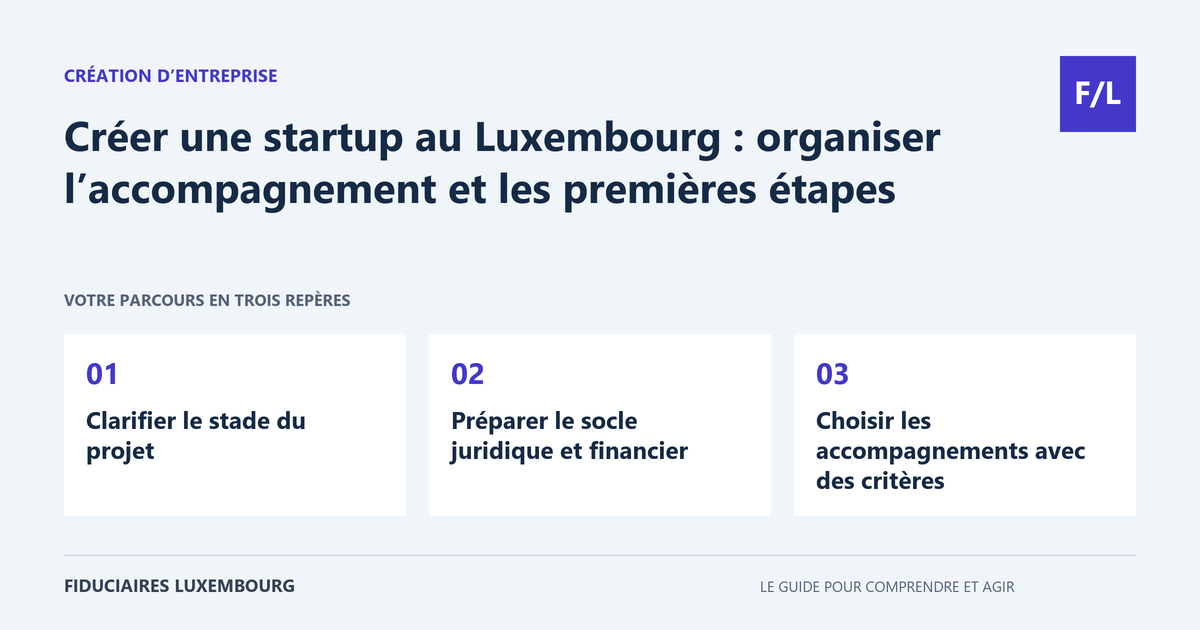
Describe what exists: an idea, a prototype, first users or recurring sales. Identify the next evidence to obtain and the resources required. This definition helps you seek suitable support, rather than a list of organisations unrelated to the need.
Review the services offered to founders and the current programme criteria. Timelines and conditions may change. Keep the application information and identify the commitments that would follow acceptance.
Preparing the legal and financial foundations
Determine the activity, authorisations, legal form and agreements between founders. Clarify ownership of the code, trademarks and work carried out before incorporation. A project developed together does not automatically settle ownership of rights.
Build a budget that separates product, marketing, operations and remuneration. Startup status does not remove accounting, tax or social security obligations. Organise these matters before the first invoices or hires.
Choosing support based on criteria
For each programme or service provider, specify the objective: technical expertise, market access, premises, financing or structuring. Check the cost, access conditions, duration, confidentiality and consideration required.
Assess the actual availability of the team. Accumulating applications and workshops can delay product work. Prefer interventions that lead to a decision, a deliverable or evidence useful to the project.
Setting up simple monitoring
An initial dashboard can track available cash, committed expenses, active customers and key milestones. Each indicator must have a definition and a source. Do not confuse audience, purchase intent and revenue.
Organise a regular review with the founders and the accounting firm. Compare assumptions with results, decide on adjustments and keep records of decisions. Monitoring must make it possible to act before cash becomes an emergency.
Choosing support according to the problem to be solved
Before multiplying meetings, write down the decision you want to make. Do you need to test commercial demand, strengthen a prototype, find financing or organise an establishment? An acceleration programme, a technical partner and an accounting professional will not provide the same answer. Set a concrete outcome for each discussion: assessment, introduction, action plan or engagement proposal.
Luxinnovation presents Fit 4 Start in particular as an acceleration programme combining support, expertise and access to a network. Admission depends on the programme's conditions and selection process. Consult the current call, its timetable and the criteria applicable to your team before including this support in your plan. A past edition, pre-registration and an accepted application are three different situations.
Also ask what is expected of you: attendance, founders' availability, deliverables and information to be shared. Check confidentiality conditions and rights to results when collaborating with a service provider or technical partner. Support should help you progress on an identifiable decision, not simply add meetings to the calendar.
Linking the network to commercial and financial evidence
After each meeting, record a next action, a person responsible and a follow-up date chosen by your team. An introduction to a prospect remains an opportunity until it has produced a commercial commitment. In the forecast budget, separate signed sales, assumptions and mere contacts. This discipline makes your discussions with funders more credible.
When the first customers arrive, check that the organisation keeps pace: invoicing, access to data, receipts and expense monitoring. The guide on GDPR for customer and payroll data helps prepare the allocation of responsibilities. Also calculate your break-even point based on explicit assumptions: a growing business may still consume more cash.
Finally, keep an up-to-date presentation file. A short version should explain the problem addressed, the target customer, the evidence obtained and the next milestone. An appendix brings together the budget, technical requirements and legal questions. You can then approach each contact with a specific need while maintaining a shared vision of the project.
| Your need | Type of support to seek | Concrete outcome |
|---|---|---|
| Validate the market | Entrepreneurial support and pilot customers | Tested assumptions and documented feedback |
| Develop an innovation | Technical expertise and suitable programmes | Milestones, resources and conditions clarified |
| Finance growth | Funders and financial preparation | Consistent file and cash-flow scenarios |
| Structure management | Accounting, social security and legal professionals | Defined engagements and monitoring timetable |
Let us look at a practical case
Fictitious educational example, intended to explain the reasoning.
Three founders have a prototype and encouraging feedback. Before multiplying applications, they define the next step: obtaining paying customers. They check ownership of the product, allocate responsibilities and estimate the budget needed for this test. They then seek suitable commercial support and financial assistance. The chosen arrangement is then assessed by its contribution to the project, rather than becoming an additional activity with no clear objective.
Points to prepare
- Stage and next evidence defined.
- Rights, agreements and authorisations reviewed.
- Support selected for a specific objective.
- Cash and milestones monitored.
Frequently asked questions
Does a startup automatically receive assistance?
No. Each scheme has its own criteria and procedure. Acceptance and financing are not automatic.
Does incubation replace an accounting firm?
Services differ depending on the programmes. Check whether accounting and tax monitoring are actually included and who provides them.
Useful terms in this guide
Questions to ask the professional
- What support meets our next concrete step?
- What rights and commitments must be settled between founders?
To clarify the scope of your request, also consult our company formation guide.
And for your situation?
You do not need to approach all stakeholders at the same time. Start with the next concrete obstacle and the documents already available. For management, tax matters or your first hires, look for a contact who can explain their engagement and work with the project's other advisers. Search our directory for the professional suited to your needs, then ask them for a detailed engagement and quote.
Sources and verification
References consulted on 20 September 2026. Official procedures specify the applicable conditions and exceptions.
- Guichet.lu — business plan et prévisions financières
- Guichet.lu — sources et types de financement
- Guichet.lu — aides générales aux PME
- Luxinnovation — programme d’accélération Fit 4 Start
This guide explains a general process. The applicable rules depend on your situation; it does not constitute personalised advice. Report a correction.
Your next step
A specific need deserves the right contact
Accounting, taxation, company formation or payroll: prepare your questions, then search the directory for the professional who can review your situation. Check their assignments and status before entrusting them with your file.